October 27, 2026, Peru
Only 4 of 15 circular economy projects are profitable without support, and none of them belongs to an MSME
A Circular Club analysis models 15 cases in Peru and Colombia and reviews 132 published cases in the region: none of them reports how much it earned.
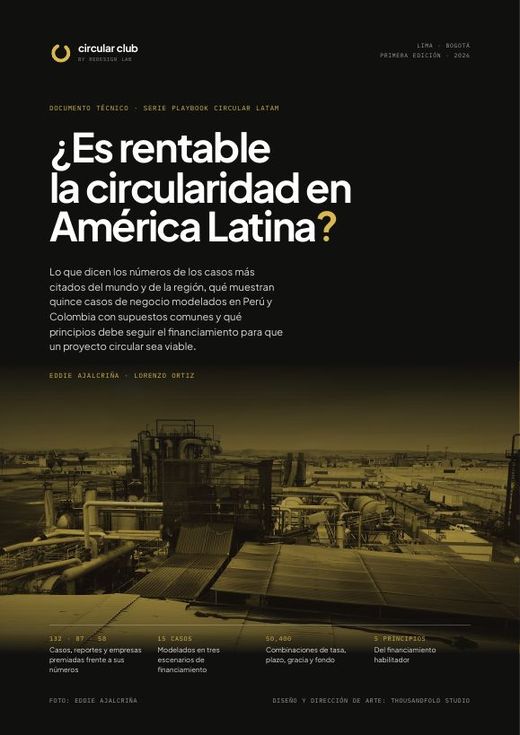
LIMA, October 27, 2026. Circular Club, the circular economy division of Redesign Lab, published "Does circularity pay off in Latin America?", an analysis of 15 business cases modeled in Peru and Colombia with their net present value, internal rate of return and funding scenarios.
Only four create value with equity, and all four belong to large companies. For an MSME project to be viable, a grant has to cover 33-57% of the investment.
The study reviewed 132 cases from four public databases, 87 corporate reports and 58 award-winning companies: none reports a realized margin or return for its circular initiative, and none of the eight reporting frameworks reviewed requires it. Only one case publishes a projected return.
According to the analysis, the underlying problem is global, since cheap virgin material also hits Europe, but the region makes it worse.
Burying a ton in a landfill costs USD 7-14, while in Belgium or the United Kingdom the tax alone exceeds USD 100; MSMEs access expensive capital with short terms, and recycled content targets are rarely verified.
With a loan at 7.5% and terms of up to 7 years, an MSME still needs a grant covering from a third to more than half of the investment. The missing instrument in the region is a USD 5,000-35,000 loan, 5-37 times smaller than the typical minimum ticket for impact debt.
The document proposes principles to design it: a term aligned with the life of the equipment, a grant for pre-investment and ramp-up, a guarantee that replaces collateral, a staged combination and verified measurement.
The circularity that wins does so at scale and with thin margins. Among companies that publish their accounts, profitable recycling earns 1-7% net, while asset rental and sharing, rarely presented as circular, earn 8-18%.
“For years we have been giving awards to circular projects without asking how much they earn. If companies, funds and development agencies do not publish their financial results, including those of the projects that did not work, nobody will learn how to finance them.”
Eddie Ajalcriña, co-founder and director of Circular Club and co-author of the analysis
“What an MSME needs is a loan that actually exists, of USD 5,000-35,000 and with a term long enough for the equipment to pay for itself. That loan costs more than the company can pay, and someone has to cover the difference: a fund, the value chain or the buyer.”
Lorenzo Ortiz, co-author of the analysis
The 15 cases are illustrative: they were built with public data from the region and do not represent real companies. Every figure in the document carries its source, and 50,400 funding combinations were tested.
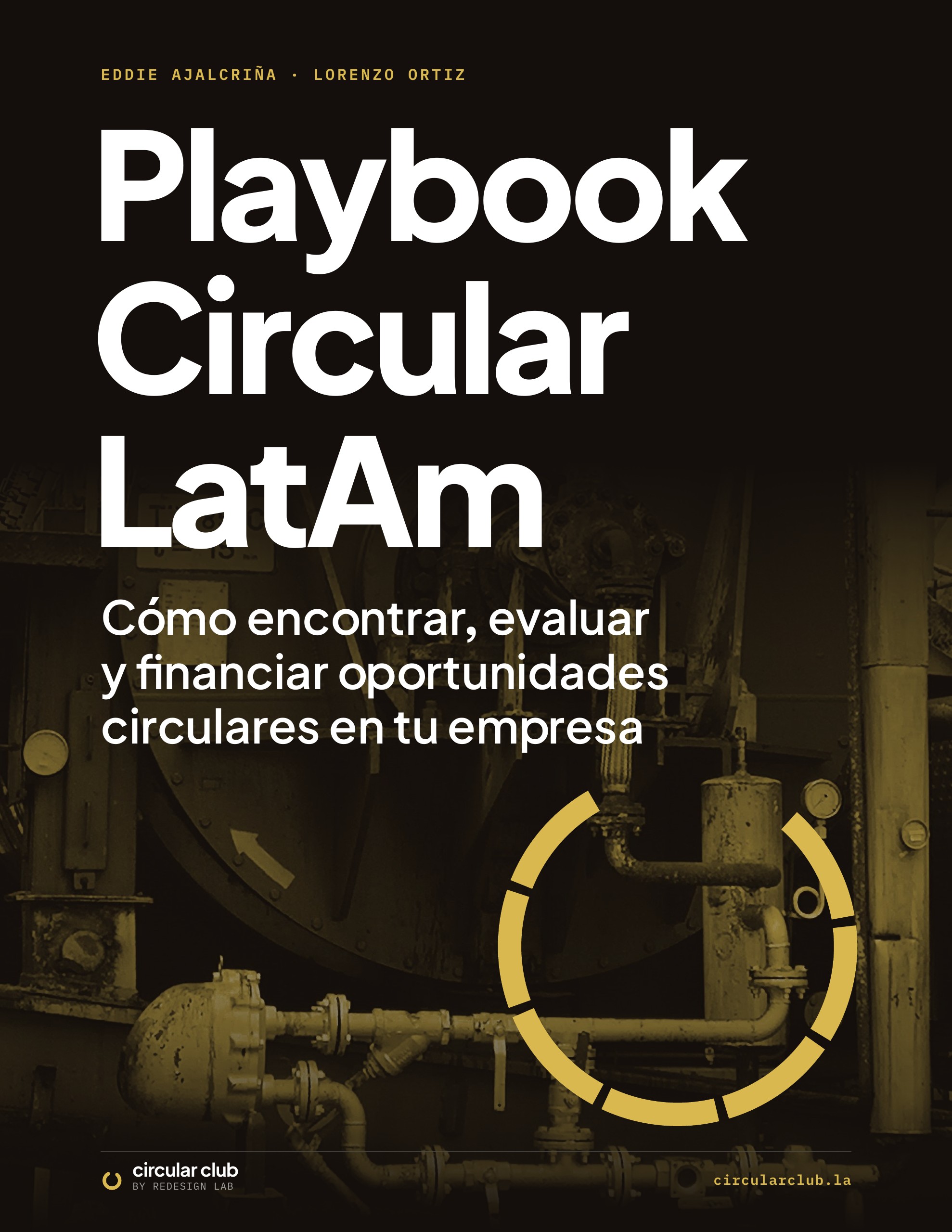
The full analysis can be downloaded for free at circularclub.la/playbook/rentabilidad, also in English, and the database of the 132 coded cases is available to journalists and researchers on request. The analysis accompanies the Circular Playbook LatAm, available at circularclub.la and on Amazon.